5 Top London Christmas Party Venues For 2019
When tasked with the mission of finding an event venue for your Christmas party, it can often seem like there can be an overabundance of options – especially in a bustling city like London. To help you narrow down your choices, we’ve put together a list of our favourite London Christmas party venues for 2019. From the spectacular to the stylish, we aim to help you find your perfect festive function venue.
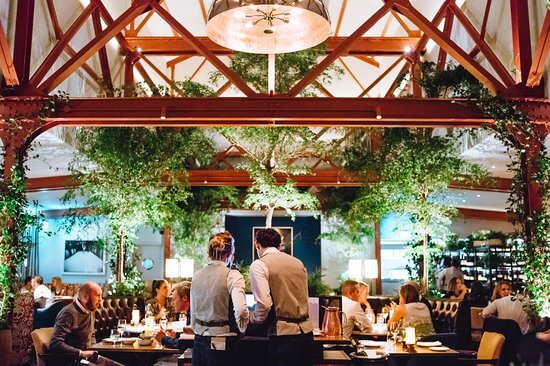
1. Bluebird, Chelsea
Located in the heart of Chelsea, the Bluebird restaurant has been a popular event venue since it opened in the 1990s. With five function rooms of varying sizes (options ranging from 32 dining guests to a standing capacity of 650 people), you can choose a set-up to suit your seasonal occasion.
The atmosphere at this private dining space is best characterised as ‘buzzy’, combining glamorous designer decor with upbeat festivities. Everything – from the food and decorations to music and drinks – is totally in-keeping with a traditional Christmas, guaranteeing a night of warm, festive cheer.
The Bluebird is a popular choice for events all year round but especially so at Christmas… so get in quick to book your December do.
2. German Gymnasium, Kings Cross
If you’re looking to inject a touch of European flair to your work Christmas party, German Gymnasium marries classic British Victorian architecture with a menu authored by German-born chef Bjoern Wassmuth.
For festive celebrations, you can hire out the whole formal mezzanine restaurant in all its seasonal glory. For smaller groups who are still keen for a high-brow Christmas, there is also a semi-private space available, a ground-floor Grand Cafe and an outdoor terrace – although you might want to bring a coat if opting for the latter!
The German Gymnasium is also the annual home to a truly spectacular Christmas tree, sitting snugly beneath the main hall’s 57 feet high ceiling.

3. The Conservatory & Garden Room, Barbican
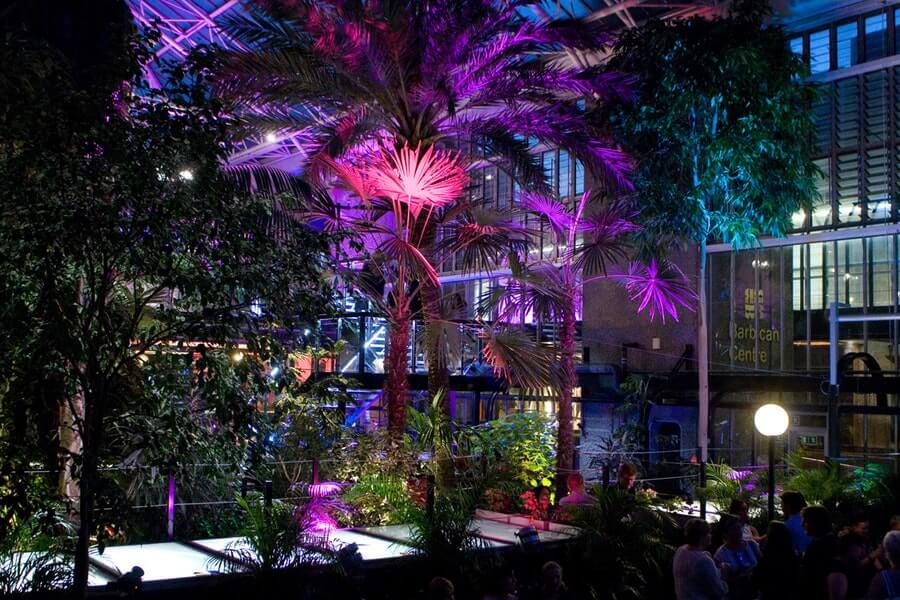
Perhaps you are looking for something a touch more exotic for your Christmas bash this year? If so, the tropical plants, exotic fish and dancefloor of the Conservatory & Garden Room may tickle your festive fancy.
Suitable for parties from 150 to up to 650 people, you can either opt for the ‘dinner and dance’ package or a standing reception. Either option comes with a ready flow of Christmas drinks and winter merriment that are sure to help your team unwind after a hard-working 2019. Live music or a DJ are also included in some packages.
4. ICEBAR London, Piccadilly Circus
This next entry definitely ticks all the boxes if you’re in search of a ‘cool’ Christmas venue.
Frosty festivities at ICEBAR provide a wintery wonderland brimming with Christmas magic. The venue is split into three warm spaces for cosy conversations and one icy space – chilled to -5 degrees!
Decorated with Christmas lights, giant baubles and, you guessed it, ice sculptures; you almsot feel like you’ve stepped into Lapland itself. Capacity ranges from 25 to 270, with options for seated dining or standing with canapes.
5. Us&Co, Monument
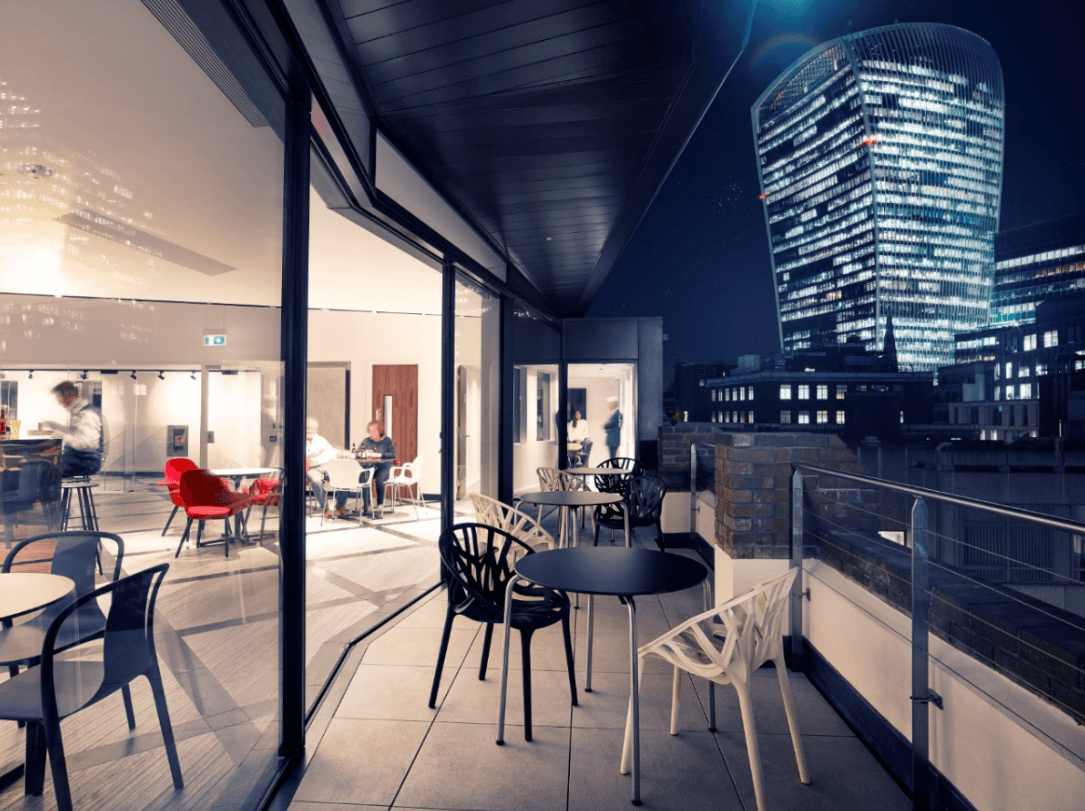
Of course, we couldn’t discuss London Christmas event spaces without throwing our own hat into the ring. We are extremely proud of our spectacular Club Space, on the 9th floor of our London City Business Centre and are looking forward to hosting many memorable festive parties this year.
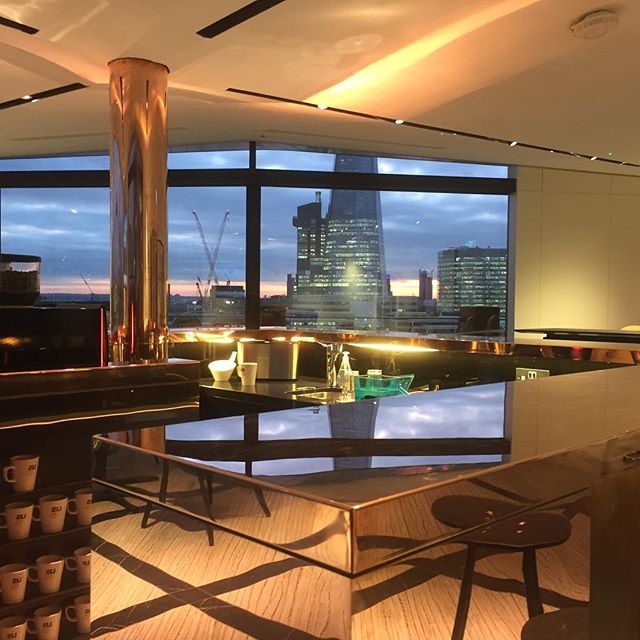
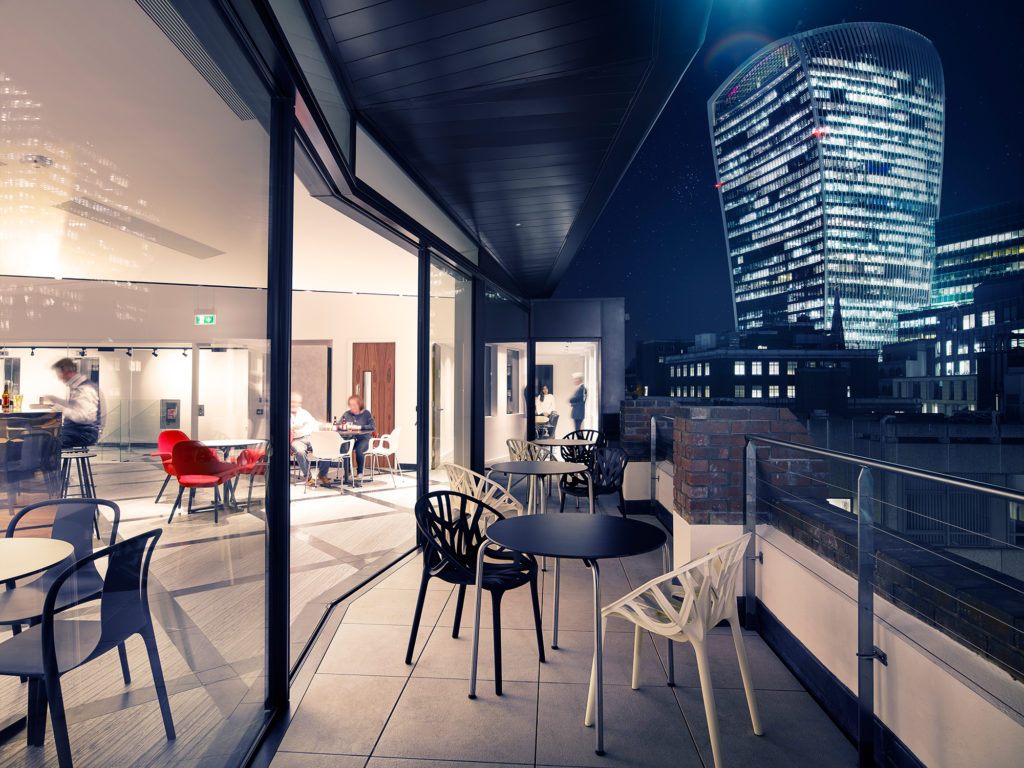
In particular, we are proud to offer party-goers breathtaking panoramic views of the London skyline – looking out over the Thames and the twinkling nighttime lights of the Shard, the Walkie Talking and Canary Wharf.
And that’s all to be enjoyed whilst sipping on seasonal cocktails and dining on mouth-watering canapes. In the centre, there is a stunning copper bar – the iconic event space centrepiece that you would also find in our Dublin location.
The capacity of our Christmas party venue is 60 seated or 120 standing and we can adapt the decor to your preferences – allowing flexibility to host a formal or more relaxed event.
For more information, click here for our floor plan, menu or virtual 360 tour. You can then make an event enquiry here or call the Us&Co team on 020 3031 3535.
Co-Working Vs. Working From Home

In the last four years, the number of people working from co-working spaces has increased phenomenally. As recently as 2015, just over half a million people around the world opted for co-working. In 2018, that number exceeded 1.6 million.
A similar trend is evident when looking at the increasing number of people working from home. It is estimated that – in the UK alone – the number of people remote working has increased by over 200,000 since 2012, to a staggering 4 million.
Both practices offer flexibility and a respite from conventional, desk-chained office working. But how do you work out which is best for you? In this article, we run through some of the most lucrative benefits of co-working and why the set-up is so appealing to workers around the world.
Interested in trying out co-working yourself? Get in touch with the Us&Co team to discuss membership at our London Monument or Dublin workspaces.
1. Co-working centres are designed with productivity in mind
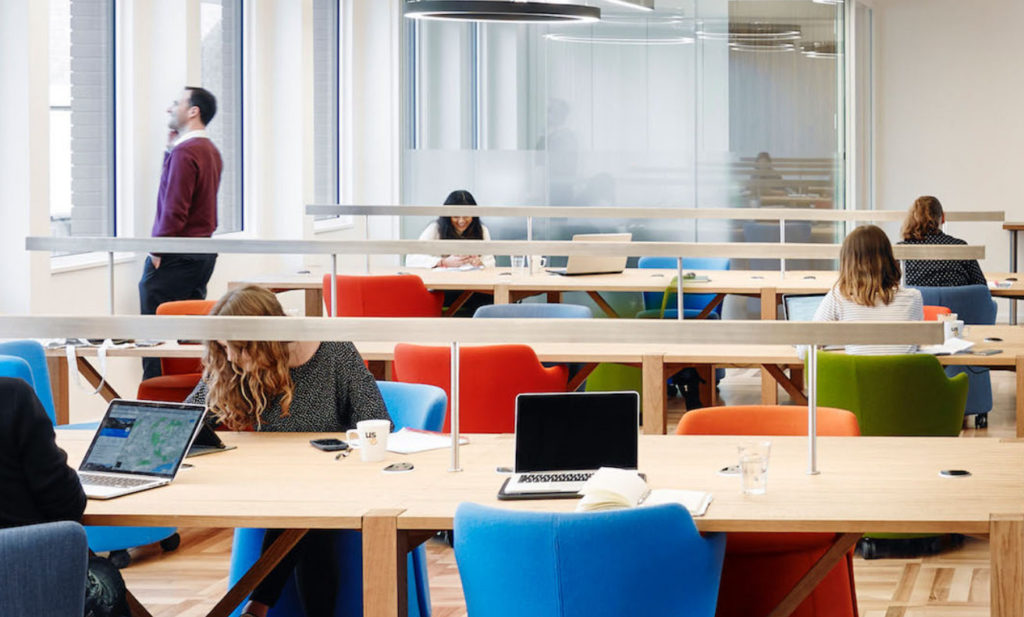
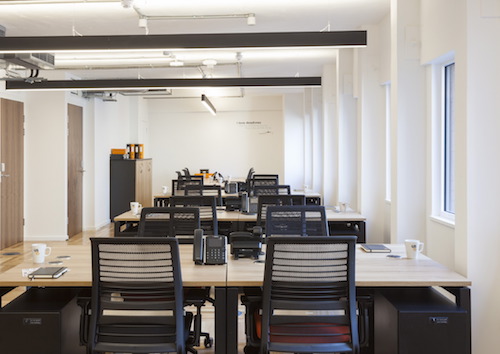
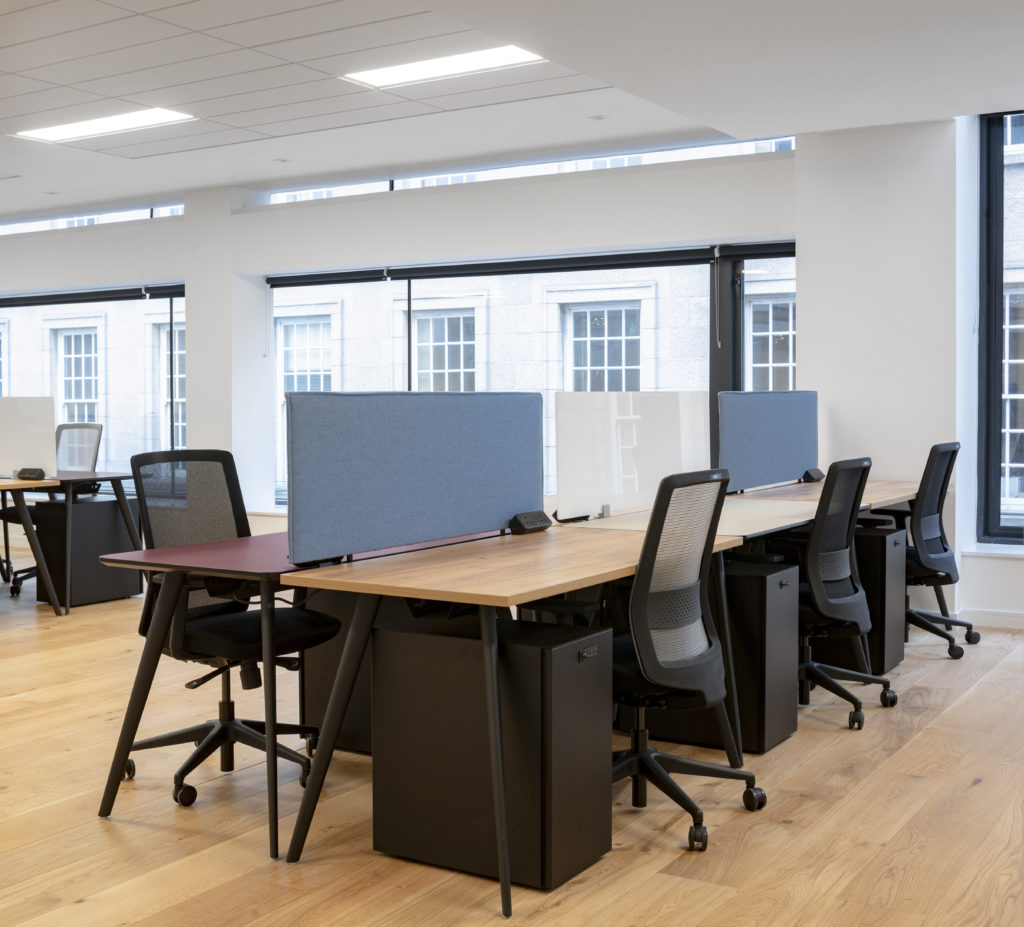
From the spacing of desks to the selection of furniture, a lot of thought and planning goes into the layout of a co-working space. Panels on the side of desks ensure that every individual worker can work on confidential projects without being overlooked. Break-out spaces are also typically kept very separate to working stations, with dedicated areas or rooms for breaks and lunches. This means that the coffee-break chatter doesn’t distract fellow co-workers who are sat at their desks.
One of the major downsides of working from home is that you end up working in an environment cluttered with personalised distractions. It is so much more difficult to concentrate when your TV, games and social media are all so readily available. There is no-one else around to hold you accountable for lapses in productivity.
Co-working eliminates that. Business centres like Us&Co are designed, decorated and furnished in-line with the latest theories in occupational psychology. Everything from desk layout and chair selection to breakout spaces and the flow of natural light has been carefully considered to help you get the most out of your working day.
Read more:
– Why Natural Light Improves Productivity
– Why Co-Working doesn’t mean reduced working privacy
2. Schedule and routine
Overcoming the temptation to oversleep or procrastinate when you don’t have established work hours can take a substantial amount of self-discipline. Who’s going to notice if you sleep late into the morning and don’t begin working until lunchtime?
At the other end of the day, a common working-from-home trap is to continue working late into the evening. Long, laborious days are highly likely to decrease your attention span and productivity. Worse still, a study conducted by University College London found that working 55 hours or more a week increases the chances of suffering a stroke by over 30% compared to those who work the regular 40 hours or less.
Co-working, whilst still vastly more flexible that the conventional office set-up, makes it much easier to stick to a routine than working from home. You have more accountability from your fellow co-workers, not to mention somewhere to physically disconnect from the temptation of afternoon naps.
Read more:
– Are you taking breaks all wrong?
3. Socialising and networking
Human beings are natural socialisers. Our brains are hard-wired for interaction with other people, releasing dopamine as the direct consequence of socialising.
Co-working far exceeds working from home when it comes to providing social opportunities. Workspaces like Us&Co know it’s important to prioritise both work and play, offering members events, breakfasts, after-work drinks and more. Co-working fosters a community that a home-worker simply wouldn’t be able to replicate.
Working-from-home induced isolation can be dangerous for a number of reasons. Firstly, from a mental health perspective, loneliness can go on to trigger depression or anxiety. Secondly, isolation from your colleges can actively damage your career progression prospects. Sadly, studies show that in many cases ‘out of sight = out of mind’.
4. Professional Meeting Locations
A significant proportion of people who work from home perform some sort of client-facing role – for example, freelance consultancy, sales or media. As such, they quite often have to meet with clients, leads, partners and investors – which is quite difficult when your only available meeting space is around the kitchen table!
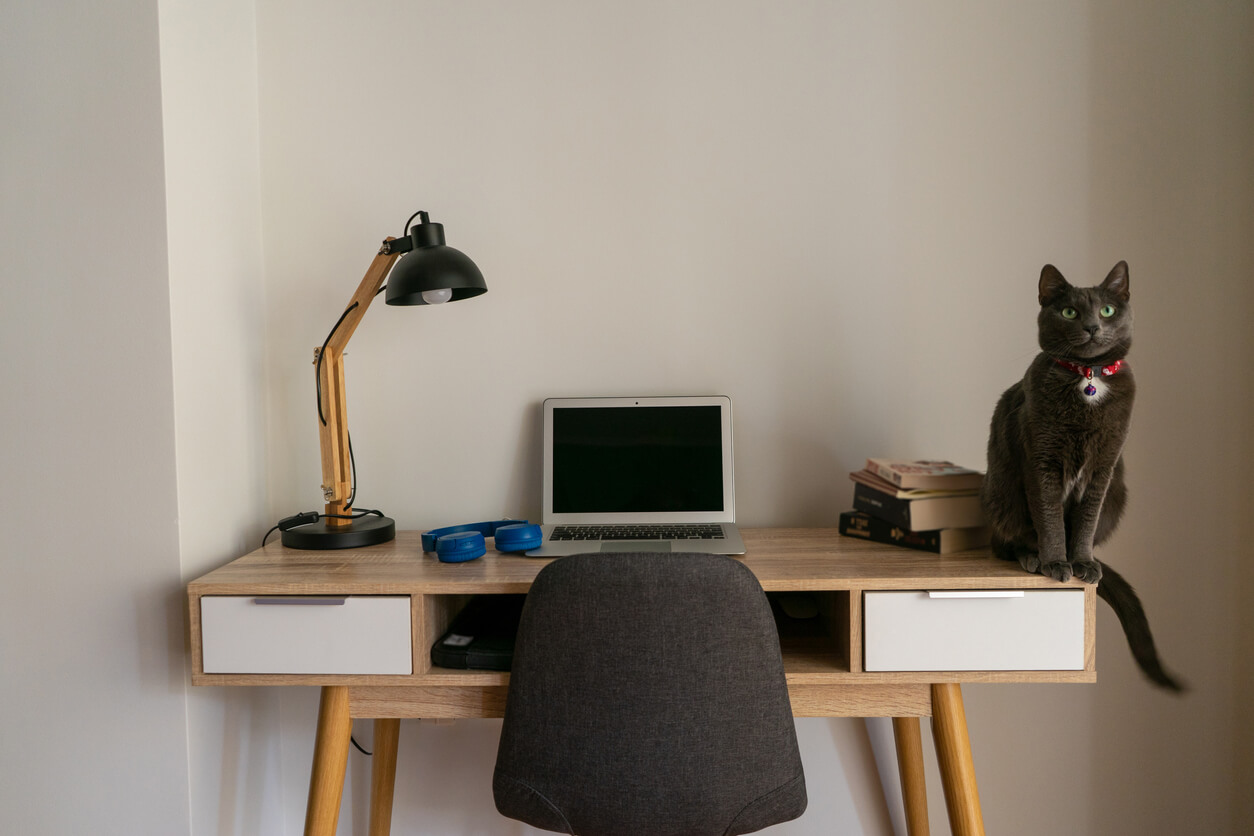
Co-working spaces offer a notable advantage over this, in that they provide a professional location to host and impress. This is true for a number of reasons:
First of all, co-working buildings themselves tend to be decorated, furnished and laid out in a highly sophisticated manner, that is always going to provide a positive first impression of your brand.
Secondly, there’s the option to book high-tech meeting rooms, equipped with sound-proofing, conference call capabilities, ergonomic chairs and whiteboards – facilities that the average home is unlikely to have.
Even if working from home is your chosen option, using co-working spaces to book external meeting rooms is always a good way to present yourself professionally.
Interested in co-working?
Us&Co offer professional co-working (hot desks, fixed desks, private offices, meeting rooms and event venue hire) in London and Dublin. We pride ourselves on creating a working atmosphere in which growing businesses, SMEs and individuals can thrive and grow.
Get in touch with the Us&Co team today:
How The Olympics Turned Stratford Into A Thriving Hub of Business
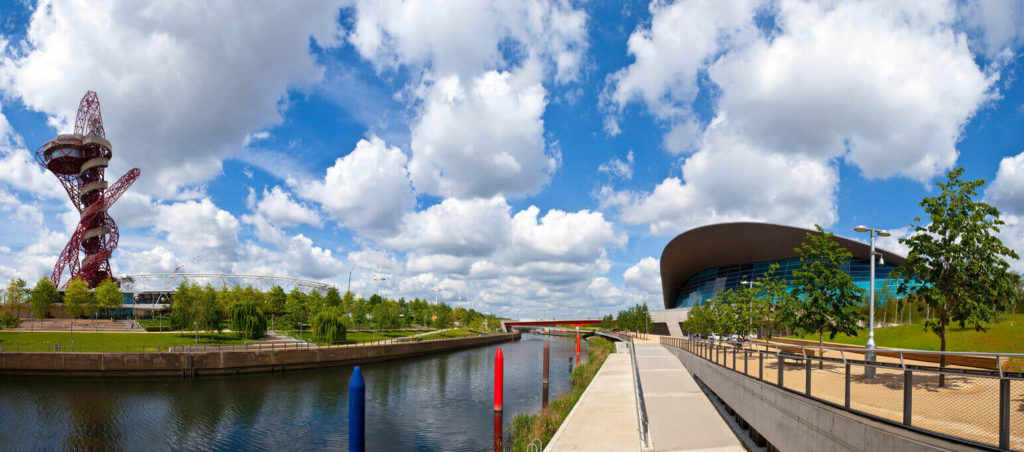
Back in 2005, the International Olympic Committee announced that London was to host the 2012 Summer Olympic and Paralympic Games, for the first time in over 60 years. The UK capital was determined to put on a show, especially considering how much of a tough act Beijing 2008 was always going to be to follow.
Plans were soon drawn up for the Queen Elizabeth Olympic Park, a complex sporting venue in Stratford. Following a period of severe economic decline in the latter half of the 20th century, the London East End district of Stratford seemed to some like an odd choice to host such a sporting spectacle.
Fast forward almost 15 years (and over £9 billion) and any initial concerns have been well-and-truly quashed. The London Olympics were a phenomenal success and Stratford achieved a new lease of life as a thriving centre of tourism, retail and business.
In this article, we explore the Olympic story of Stratford’s past, present and future in the wake of London 2012. In particular, we will look at the growing opportunities for businesses in the area and why so many companies are looking to East London.
What was Stratford like before the Olympics?
The second half of the 20th century was not kind to Stratford. De-industrialisation led to the loss of tens of thousands of jobs for Stratford inhabitants, thanks in no small part to the closure of the London Docks in the 1960s.
A particularly iconic symbol of Stratford’s industrially unloved reputation was the so-called ‘Fridge Mountain’. The 20-foot tall collection of discarded white goods on the riverbank was thought to be the biggest of its kind in Europe!
The construction of the Stratford Olympic Park itself was a colossal undertaking. It took 46,000 workers to construct the Olympic Stadium and grounds, which had a total capacity of 80,000. Renovation even included the removal of 2,000 newts from the Olympic Park building site – along with 4 human skeletons, dating back 3000 years to the Iron Age!
The promise of Olympic prosperity was therefore a very exciting one for Stratford. The project set the stage for over 46,000 new jobs in the district, a 30% increase in rail capacity through Stratford station and over 20,000 new homes. There were also plans for three new secondary schools, 23 new GP clinics and – unsurprisingly – world-class sports and leisure facilities.
And yes, clearing ‘Fridge Mountain’ was one of the first things ticked off Stratford’s to-do list.
What was Stratford like during the Olympics?
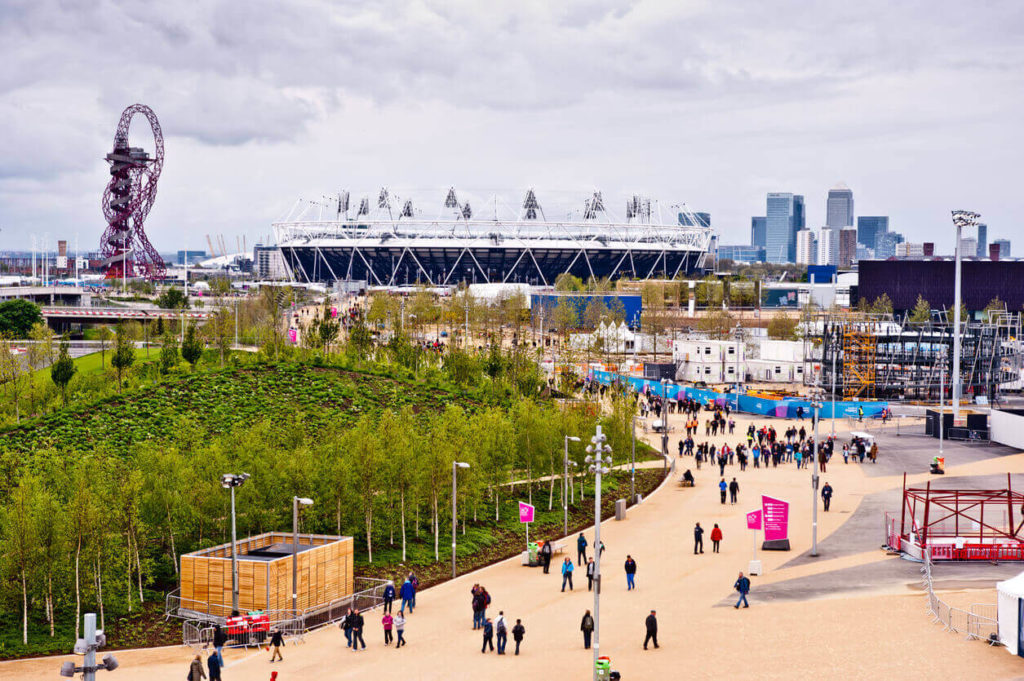
Stratford was home to the athletes’ Olympic Village and several key sporting venues: the London Stadium, London Aquatics Centre and the Lee Valley VeloPark.The ArcelorMittal Orbit was constructed to overlook the Queen Elizabeth Olympic Park, an observation tower and Britain’s largest piece of public art.
During the Games fortnight, it is estimated that as many as 370,000 visitors came to the Olympic Park every single day. 10,500 athletes from 204 nations participated across 26 sports, supported by 70,000 volunteers or ‘Games Makers’. At peak hours, over 200 trains travelled into Stratford Regional Station.
What is Stratford like now?
7 years on from the Games, post-Olympic Stratford is nearly unrecognisable compared to Stratford at the turn of the millennium.
The Queen Elizabeth Park has been transformed into a bustling hub and great destination for tourists looking to explore the legacy of the London Olympics. The area’s population sits healthily at 51,000 and Stratford Train Station is now the 6th busiest station in Britain.
The Westfield Stratford City Shopping Centre, which opened in 2011, is one of the largest urban shopping centres in Europe. Westfield attracts 50 million yearly visitors and has so-far generated retail sales of more than £7.4 billion.
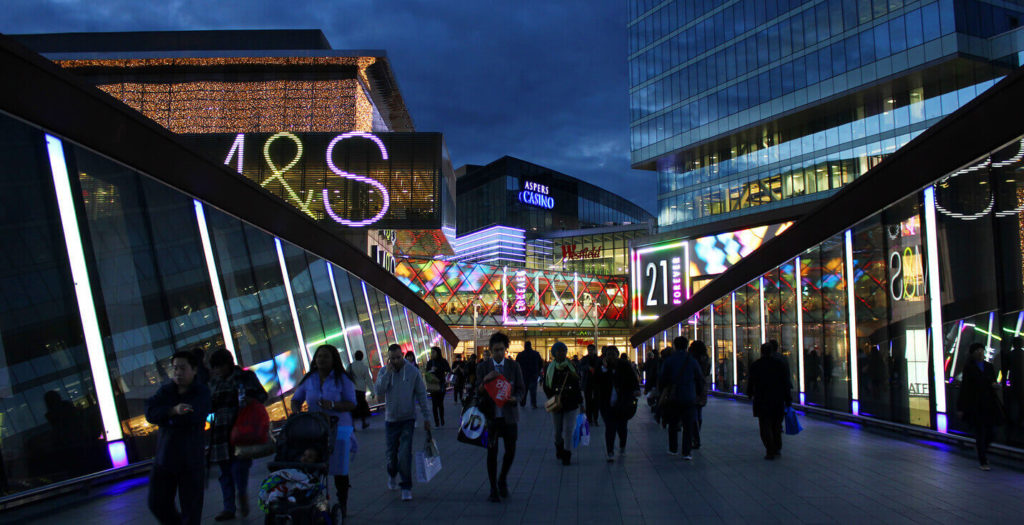
Outside of retail, there is also a thriving network of global heavy-weight companies setting up Stratford bases. Transport for London, Cancer Research, the Financial Conduct Authority, Unicef and the British Council all have a sizeable presence in the area.
Higher education establishments like Loughborough University and University College London have invested heavily in Stratford campuses. As a result, there is a rich pool of potential talent ready to be utilised by established brands and start-ups/SMEs alike.
In a word, the Stratford business scene is thriving.
What does the future look like for Stratford?
Expectations for future growth in Stratford are extremely high.
One especially exciting area of development is the upcoming Elizabeth Line/Crossrail, which will extend as far as Reading in the West and Shenfield in the East. This will enhance Stratford’s connection to both central London and key commuter towns in Berkshire and Essex.
The Elizabeth Line will reduce direct journeys from/to Stratford Station to:
- Liverpool Street – 7 minutes
- Canary Wharf – 8 minutes
- Tottenham Court Road – 13 minutes
- Bond Street – 15 minutes
- Paddington – 18 minutes
- Heathrow Central – 44 minutes
- Reading Station – 68 minutes
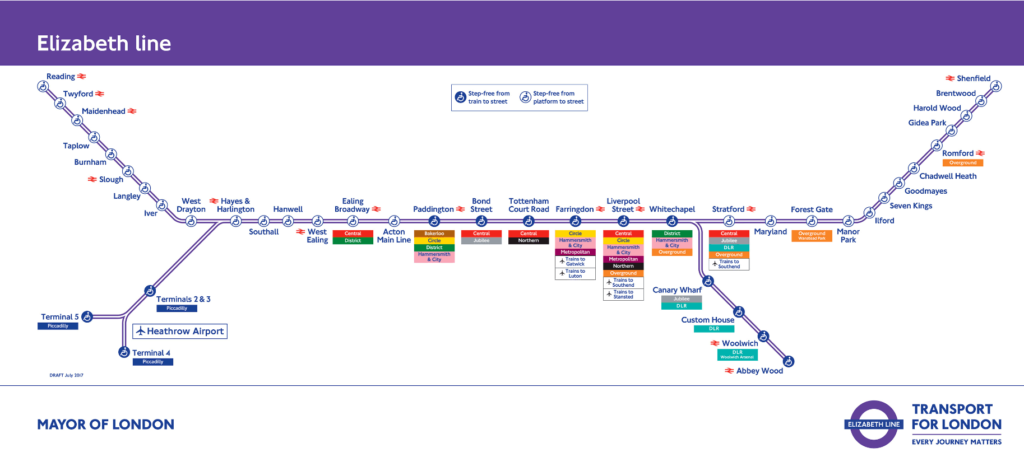
Considering that Stratford is already conveniently placed for London City Airport and is well-connected via the DLR, this makes the area arguably the most ideal commuter hotspot in London – at least outside of Zone 1.
Development in Stratford did not simply stop once the Olympics were finished. A £2.4 billion cluster of office blocks is currently underway close to the train station. The 11 towers being constructed will end up constituting a business site approximately the same size as Canary Wharf. This is enough office space for over 25,000 workers.
Brands of all shapes and sizes, industries and markets are consequently flocking to Stratford. The area offers central London connectivity, beautiful green space and a dynamic business landscape that is set to only keep growing from strength-to-strength.
Announcing: Us&Co’s Brand New Stratford Co-Working Space
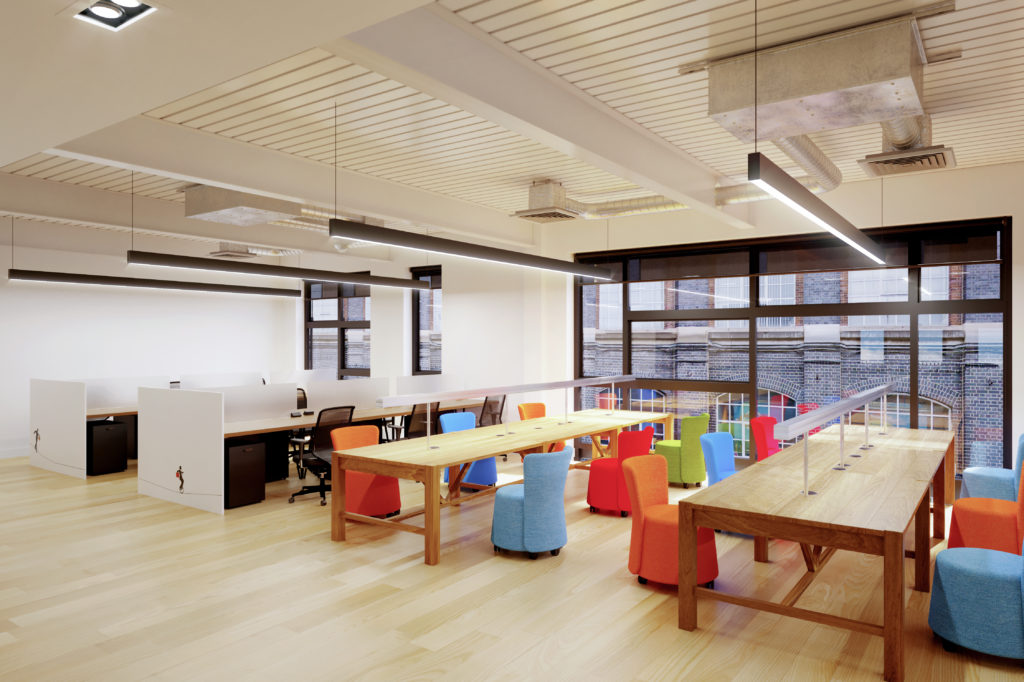
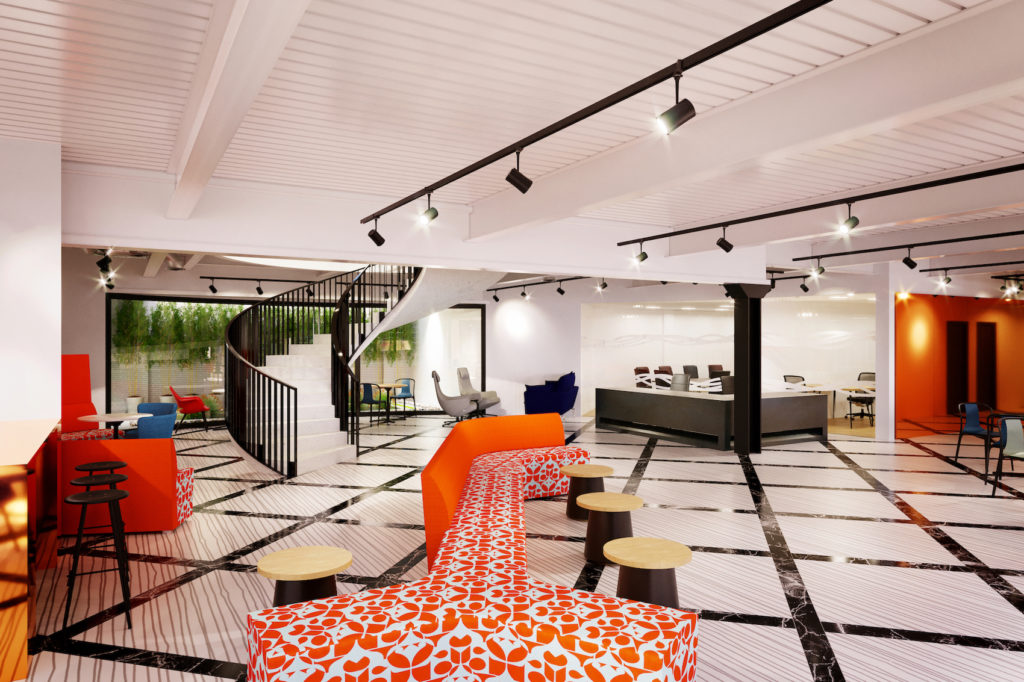
Us&Co is incredibly proud to announce that we are going to be opening our third serviced workspace in Stratford in early 2020. This new professional, shared workspace will be just a few minutes walk from the train station – perfect for freelancers, start-ups and established brands alike to make the most of everything Stratford has to offer. It will have 6 floors and over 30,000 sq. ft. of private offices, co-working hot desks, meeting rooms and modern training rooms. Register your interest now for fantastic early bird discounts.
Resources:
Top 3 Advantages Of Stand-Up Meetings & How To Do Them Right
Stand-up meetings are an increasingly popular trend in offices and workspaces around the world, involving discussions held by standing participants around (usually raised) tables.
There are a number of benefits to this practice, which this article will explain. However, it is important to do stand-up meetings right in order to get the most out of them.
So, starting at the start…
What Are The Advantages Of Stand-Up Meetings?
1. The health benefits of standing meetings
It is hopefully no surprise that remaining seated for extended periods of time is highly problematic for your general health.
Spending too high a proportion of your working day sat down increases your chances of heart disease, diabetes, high blood pressure and even dementia. Office-chair-potatoes also face a high risk of suffering from Deep Vein Thrombosis, a clot that forms in your leg, often the result of sitting still for too long.
And then there are the problems of posture. Days spent almost entirely at your desk or seated around a meeting table are a dangerous recipe for slumping, inevitably leading to back issues. So widespread is this, in fact, that a survey of 250 doctors ranked musculoskeletal disorders as the most common type of work-related illness.
Stand-up meetings therefore offer a well-needed respite from sitting. They allow you to stretch your legs, recharge your batteries and get your blood flowing.

2. Standing meetings are much more efficient and short
Standing meetings are a phenomenally effective way of ensuring that meetings stay short and on topic. The reason for this is because of the comparative discomfort of standing for long periods over sitting. When you are sat comfortably, it is much easier to waste time with drifting conversation. In fact, the efficiency of standing meetings is so great that studies show they last, on average, 34% less time than seated meetings.
So, if you find your meetings drifting off topic or going round in circles, getting up on your feet may be the answer.
3. Stand-up meetings encourage productivity & dynamism
Standing up during a meeting boosts the attention span and ability to provide a creative, productive contribution.
Researchers from Washington University performed a study on this phenomenon. They asked volunteers to take 30 minutes to plan a short university recruitment video. Some volunteers worked in rooms with chairs arranged around a table and some with no chairs at all.
The researchers found that volunteers who were standing during the session were more likely to share their ideas. Through recordings from sensors worn on participants wrists, the study also found that the standing volunteers were more physiologically excited during the process.

How To Run A Productive Stand-Up Meeting
Many of these benefits of a stand-up meeting are only actually advantageous if you do them right. To help you ensure that you do this, we have therefore outlined our top tips for running a productive stand-up meeting:
1. Keep it short
An hour-long stand-up meeting defeats the whole point. Not only does it mean that you’ve failed to leverage the main benefit of stand-up meetings (the way they encourage concise, productive conversations), but you’ve likely lost the attention of your participants. Whose mind wouldn’t wander after 45 minutes + on their feet? Aiming for approximately 20 minutes is ideal to get the most out of a standing meeting.
2. Prioritise discussion over dictation
Seeing as stand-up meetings encourage creativity, interaction and collaboration, don’t squander that by spending the entire duration reading off of PowerPoint slides. Instead, brainstorm, swap ideas and receive input from the whole team. Stand-up meetings are much more dynamic than seated ones… don’t waste that!
3. Keep moving
One of the problems some people have with stand-up meetings is that they struggle with cramp or fatigue. However, those problems are much more likely to affect those that spend the entire time stood perfectly still. Even just a slight bit of movement helps improve circulation and prevent cramp. Wander around a little bit during the meeting. Swap who is writing on the whiteboard. Have a dedicated ‘speaker space’. Just don’t be a statue.
Booking Stand-Up Meetings Through Us&Co
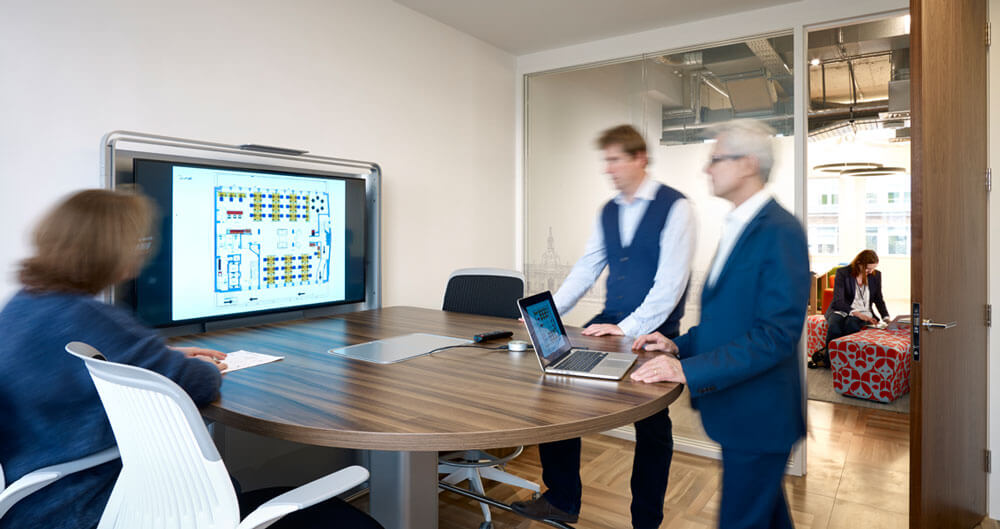
Interested in hosting a stand-up meeting but without the ideal space to do so? Why not book a meeting room at one of Us&Co’s London workspaces, complete with elevated tables that are perfect for standing meeting participants.
Co-Working In Numbers: Everything You Need To Know About Flexible Working
What Is Co-Working?
Co-working is the flexible working style that has recently become a hugely popular choice for millions around the world. Essentially, it is the practice of working in a shared business centre alongside members from different companies and industries.
There is no one-size-fits-all way of co-working, with the majority of co-working spaces offering a variety of memberships.
Some business centres, like Us&Co, offer what’s known as a ‘Pro-working’ experience, which includes all the core benefits of co-working, but on a more professional level. Click the following link to read our article on the differences between co-working and pro-working.
Different Kinds of Co-Working Memberships Include:
Hot-desking is when you move where you work within a business centre on a day-to-day basis. This kind of working keeps you flexible. Studies show that the variety helps ensure a refreshed mindset that is particularly useful for creativity.
-
Fixed desks/dedicated desks
Fixed desk memberships offer you a dedicated desk to make your own. Ideal for either one-man-bands who prefer consistency and routine, or teams of workers who want to ensure they remain seated together.
Private offices offer all the benefits of co-working for larger teams of workers. Still situated within collaborative business centres, but often on your own dedicated floor or with barriers to provide more privacy.
Owing to the flexible nature of co-working, the practice appeals to a wide variety of workers and industries, both big and small. Co-working is a growing favourite among flourishing businesses, SMEs, freelancers, the self-employed, start-ups, travelling employees and big brands alike.
This article looks at all the statistics and facts surrounding the co-working boom, from the most popular co-working locations to the industries that co-workers typically come from. We also address the advantages of co-working, and why you should consider it for your up-and-coming business.
Interested in learning more about how co-working could help your company thrive? Contact Us&Co today to find out about co-working memberships at our London Monument.
The growth of co-working – how many people co-work around the world?
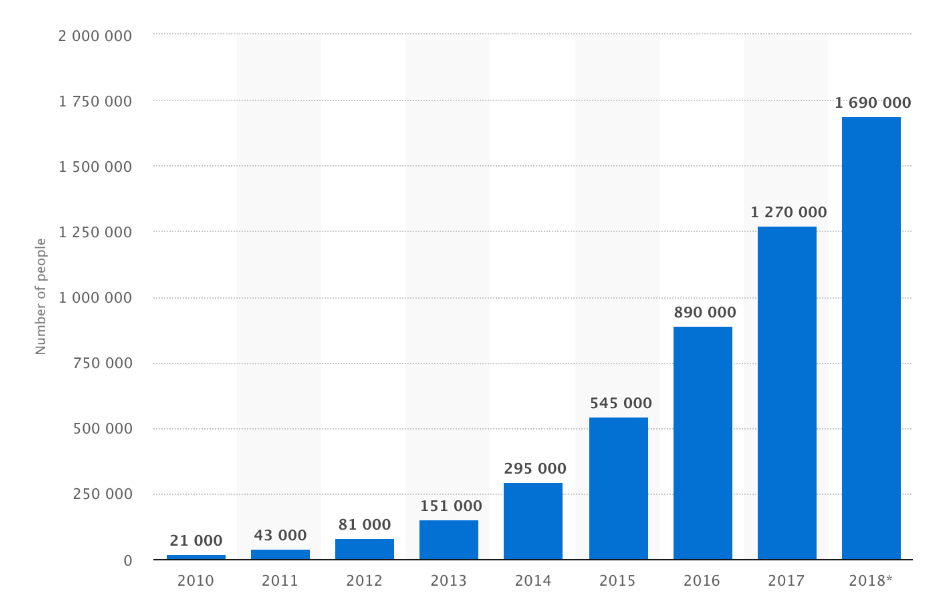
The co-working timeline is an interesting one, with the practice being a relatively recent phenomenon. At the beginning of the decade, just 21,000 people around the world were co-working. In staggering contrast to that, 2018 saw 1,690,000 people signed up to co-working memberships.
A lot of this growth has occurred in the last couple of years. The number of global co-workers has more than doubled since 2016, and this growth is projected to continue. It is estimated that, by 2022, there will be 5.1 million co-workers in the world, with over 1 million in the USA alone.
The graph below, with information compiled from statista.com, shows the growth in the number of people co-working around the world over the last 8 years.
What Are The Most Popular Co-Working Locations?
It is estimated that there are currently almost 15,000 co-working spaces around the world, as of the beginning of 2019. In the US, this equates to 2.5 million square metres. In London, arguably the co-working capital of the world, 994,000 square metres are dedicated to co-working.
Global cities, in particular, are thriving hubs within the co-working industry.
In London, New York and Chicago, shared workspaces are expanding at a staggering annual rate of 20%. Co-working giant WeWork has such a substantial foot-hold in New York that it is actually on track to become the largest private office tenant in Manhattan!
Outside of the USA and UK, co-working is also a growing phenomenon in India, Spain and Germany, with 841, 483 and 311 co-working spaces registered in those countries respectively.
What Are The Most Popular Co-Working Industries?
Co-working sees people come from all walks of life and a vast variety of industries. However, some of the most popular industries that co-workers work in are:
- IT – Information technology is the main dominating industry, taking up an estimated 22% of flexible desk spaces.
- PR, Marketing & Sales – The second biggest proportion of co-workers come from these industries – increasing every year. Between 2016 and 2017, this group grew its co-working market share from 8% to 14%.
- Consultancy – Consultancy has been a core part of co-working since the trend emerged, although it is decreasing in significance (down to 6% of co-workers, compared to 11% in 2016).
Demographics – Who Is The Typical Co-Worker?
While there is no particular ‘typical co-worker’, it is interesting to look at how co-working demographics breakdown.
Recent studies show that the current average age of coworking space members is over 36 years old. When looking at the age group with the highest number of members the dominant age segment is 25 to 29 years old.
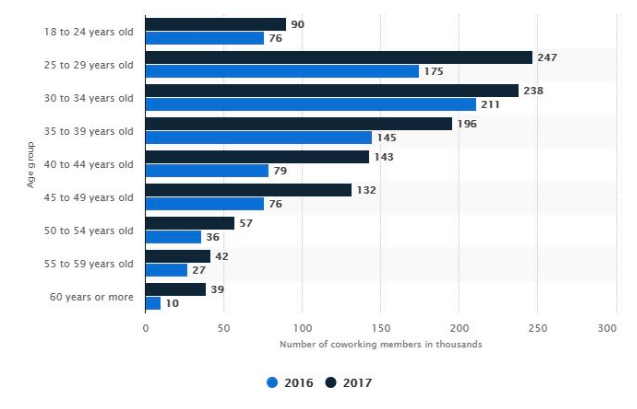
Gender-wise, male co-workers were traditionally more common. However, that does look to be changing in recent years to the extent that – as of 2019 – approximately 40% of the members of working spaces are women.
More Individuals Or Teams?
According to a recent study, 41% of all co-working space members are freelancers, 36% are employees, 16% are employers, and 7% of members are engaged in other activities, for example, studying.
The proportion of co-workers that are freelance, however, has taken a turn in recent years. In 2012, freelancers made up 55% of all co-workers. This change is mostly due to the growing appeal of co-working for company teams, looking for an alternative to inflexible office rental contracts.
What Are The Benefits Of Co-Working?
There are countless reasons why co-working has become such a popular choice around the world. But, time and time again, we see the following benefits providing the deciding factors behind the leap into co-working:
- Flexibility to choose your own working atmosphere
- Collaboration and networking opportunities
- Affordable membership fees with no difficult contracts
- Designed with productivity in mind
- Provides a place to host and impress partners, employees and investors
For more information on the advantages of co-working, read our previous article on the hidden benefits of hot-desking.

Pro-Working: What Is It & Why Is It Better Than Co-Working?
The practice of ‘co-working’ is quickly becoming such a popular working set-up that it hardly needs an introduction. Its more sophisticated sibling ‘pro-working’ is perhaps a bit less understood, yet offers a plethora of fantastic advantages. In this article, we will outline a few of the major differences between the two and the reasons why pro-working could be beneficial to your business.
What Is Pro-Working?
Pro-working is a flexible way of working for business teams or individuals within a dedicated shared work space or business centre, akin to co-working. Like co-working, members have access to fixed desks, hot desks, meeting rooms and communal break spaces. However, pro-working is more professional and prioritises providing its members with quality, sophistication and partnership.
Think of the difference between co-working and pro-working as similar to that between a standard hotel and its five-star counterpart. Both offer core services, but the latter is simply a step-up in terms of professionalism.
What Are The Advantages Of Pro-Working Over Co-Working?
The professional focus of pro-working spaces offers the following advantages and benefits to its members:
1. Enhanced Facilities
2. Designed To Impress
3. On-Site Management
4. Set-up For Long Term Partnerships
We have provided further information on how each of these benefits manifest below.
1. Enhanced Facilities
Co-working provides the necessities required to ensure members can work productively and with flexibility. Pro-working goes one step further.
Of course, pro-working members still have access to desks, WiFi, ergonomic chairs, secure storage, bookable meeting rooms and casual break-out areas, like their co-working counterparts. However, pro-workers are then offered additional facilities that would not necessarily be available at all co-working spaces. These include showering facilities, bike racks, high-tech ‘plug-in & play’ meeting rooms, catering facilities and high-speed internet.
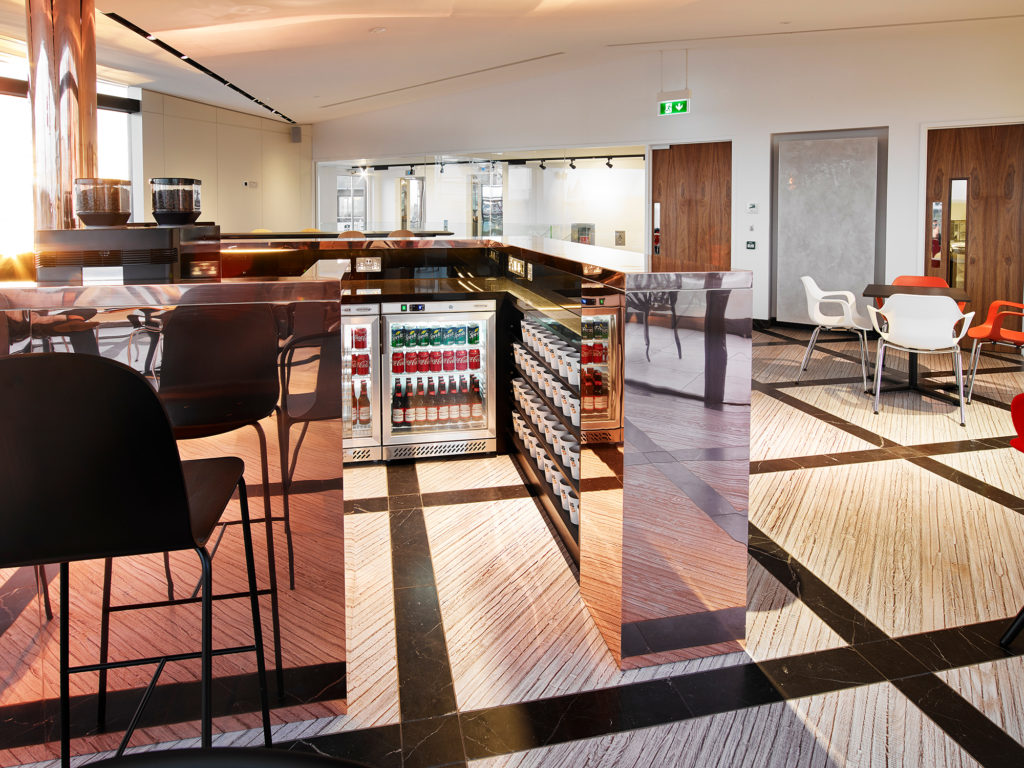
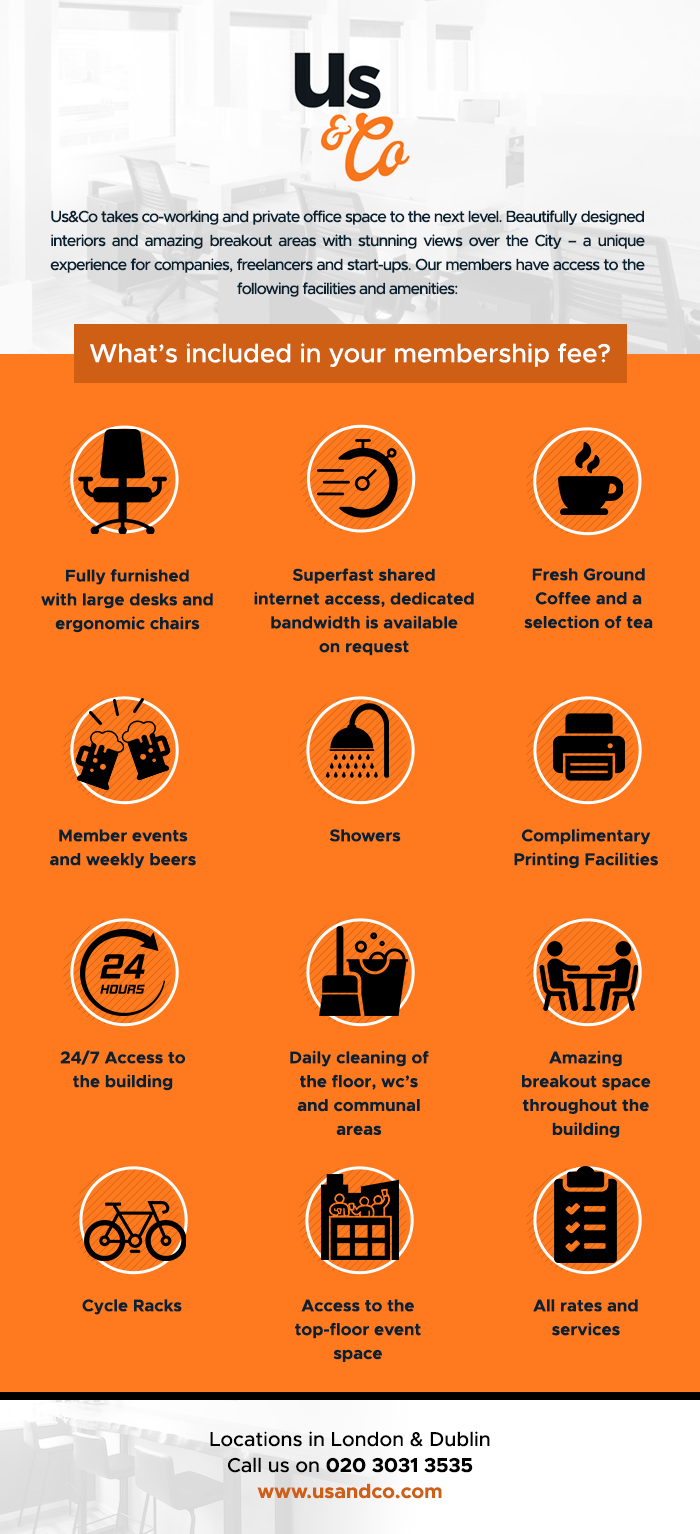
For example, at Us&Co, we are especially proud of our Members Club Space that all our members get access to as a communal breakout area , and are also bookable as event venues by external users. With a stunning copper bar in the centre, stylish cafe-style seating and beautiful views of the surrounding areas, these event spaces provide professional and sophisticated networking venues.
2. Designed To Impress
Whether you’re a start-up company or a flourishing brand, every business needs to host and impress on occasion. Sometimes it’s investors, clients, partners or potential new team-members, but it is always crucial to set the right impression.
This is something you are much more likely to achieve with pro-working rather than co-working. Pro-working spaces are often designed with sleek and sophisticated decoration, high quality furniture and with a focus on productivity and professionalism.
What’s more, pro-working meeting rooms are often of excellent quality, providing much more than the bare-minimum simple table and chairs. You can impress your attendees with high-tech ‘plug-in & play’ presentation set-ups, whiteboards, lots of natural light and even sound-reducing devices for added privacy.
3. On-Site Management
Much like how 5-star hotels provide concierge service, a helpful reception desk and a team of behind-the-scenes cleaners, caterers and operations staff, you can expect a similar level of dedicated on-site service from pro-working centres.
Co-working centres are often quite autonomous, without the regular presence of the provider. By contrast, pro-working work spaces are likely to have team members on-site most days of the week.
Us&Co members and guests, for example, are greeted by our friendly receptionist. There are then always team-members on-hand for any questions or concerns. You will often find us enjoying the facilities ourselves, relaxing in the break-out spaces or working from a hot desk.
4. Set-up For Long Term Partnerships
Pro-working companies don’t just see their members as desks to be filled or names on a database, they really care about forming lasting partnerships and relationships with the people that come through their door.
Here at Us&Co, we are personally invested in the success of our members, and thrive on seeing businesses grow and flourish within our own walls. We therefore design our entire pro-working ethos around providing our members with the active support, facilities and partnership that will help brands achieve their goals.
Whether it’s networking assistance, introducing you to other members that we know will compliment your objectives, or simply checking in over Friday drinks, the pro-working approach allows us to feel as though we are part of your extended team. Your wins are our wins.
The pro-working set-up suits brands that are looking to impress, flourish and grow, and want more out of their day-to-day working environment than just a desk and a chair.
If you are interested in checking out one of our exciting pro-working spaces in London, please get in touch with the Us&Co team today. You can call us on 020 3031 3535, or fill out our quick enquiry form on our Contact Us page.
5 Reasons Why Co-Working Doesn’t Have To Sacrifice Privacy
Co-working sometimes gets an unfair reputation for sacrificing privacy and quiet. In fact, the opposite is often true. Sharing office space can be a fantastically secure and productive way of working and we want to dispel any myths that say otherwise.
In this article, we run through the reasons why it is certainly not the case that co-working sacrifices privacy. We also look at specific efforts made by co-working business centres like Us & Co make to make sure that their members have a quiet, productive, personal space to work in.
1. How office layout ensures privacy
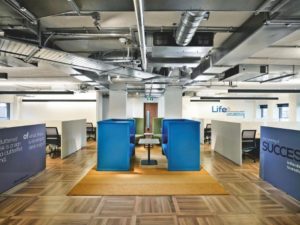
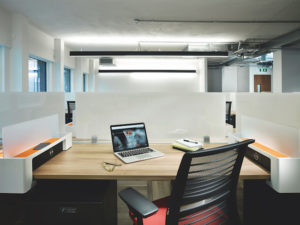
From the spacing of desks to the selection of furniture, a lot of thought and planning goes into the layout of a co-working space. Panels on the side of desks ensure that every individual worker can work on confidential projects without being overlooked. Break-out spaces are also typically kept very separate to working stations, with dedicated areas or rooms for breaks and lunches. This means that the coffee-break chatter doesn’t distract fellow co-workers who are sat at their desks.
2. Secure workspace buildings
Despite a misguided perception to the contrary, co-working spaces don’t allow just anybody to ‘come-and-go’ as they please. Shared offices often adopt fob-card entry systems, door codes or networked entry key cards. This means that only paying members can gain entrance to the co-working space.
Similarly important is the efforts put in place to protect co-workers’ personal belongings. From dedicated bike storage space to personal lockable cabinets, co-working doesn’t have to mean the hassle of taking everything with you every time you leave the office.
3. Secure internet connection
Privacy and security are no longer essential in just a physical sense, but are also crucial from a digital perspective. Compared to consumer and retail online fraud, which have been declining in recent years, cybercrime against businesses in the UK has grown by a worrying 63% since early 2017.
It is therefore a growing priority for co-working spaces and shared offices to provide their members with secure, fast internet connection. For example, all At Us & Co members have access to our super fast and highly secure WiFi, the cost of which is fully included in the up-front membership fees. We have a 1gb resilient internet line that allows for an average upload/download speed of 70mbs per second, meaning that members can surf with confidence.
4. Private meetings rooms
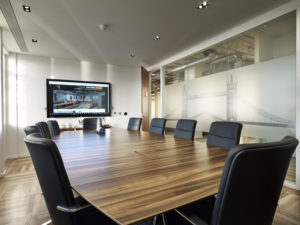
Privacy in co-working spaces doesn’t end with the work you do while sat at your desk. Many co-working brands offer private bookable meeting rooms, specially designed to keep your discussions among your team only. Sound-proofing panels are often installed on the walls of meeting rooms to stop your conversation spilling out. Similarly, frosted glass doors and windows are a great addition to a private meeting room, preventing anyone from seeing in whilst still allowing for the essential flow of natural light.
5. Member mindset
Ultimately, co-working spaces attract like-minded members. This is largely due to the nature of co-working, and how its convenience and flexibility appeals to up-and-coming businesses, SMEs and start-ups. The vast majority of co-workers are dedicated to getting on with their own work, respecting those around them and focusing on the task at hand.
Here at Us & Co, we specialise in providing our members with a professional setting in which they can concentrate and thrive. With every new member through our door – from co-working to private office members – we emphasise the importance of considerate working and respect for fellow workers’ space. As a result, we are proud of the mindful environment we maintain.
See for yourself how conducive co-working set-ups are to privacy and productivity, by booking a tour at one of our business centres in London.
Co-Working & Private Office Memberships With No Hidden Costs
Here at Us & Co, we guarantee that our co-working and private office members will never face any hidden costs.
Whether you’re looking to rent private offices to single desks, we are up-front about everything that is included in your membership fees and will never ask you to pay more for the ‘extra things’ that make up your co-working experience.
We understand how frustrating it can be to be forced to pay additional fees for every little thing. From cleaning services and storage to fast WiFi and printing, co-workers are often charged extra for services that you would be forgiven for assuming were part of what they’ve already paid.
Hidden costs outside of membership fees are, unfortunately, fairly common practice in the co-working and private office industries. We are determined to be different.
Our Membership Fees
The below is a breakdown of the varying membership fees for our professional, shared workspace in London Monument:
Serviced Private Offices: From £650 + VAT per desk, per month
Fixed Desk Co-Working: From £595 + VAT per month
Hot Desk Co-Working: From £35 + VAT per day or £295 + VAT per month
If you are interested in learning more about private office hire or co-working, please check out the rest of our website. If you would like to find out more or book at tour at either of our spaces, please give us a phonecall on 020 3031 3535. Alternatively, you can contact us here.
The Ultimate Guide For Start-Ups In London
Download our FREE e-book discussing the London start-up scene and our top tips for thriving as a start-up in the UK capital. Click the link below to download.
A thriving, populous city at the heart of global finance, technology and entrepreneurship, London is one of the most popular locations for start-ups in the world. There are currently an estimated 205,000 start-ups in the city, and that number is expected to continue growing from year to year.
Here at Us & Co, we have witnessed this first-hand. Our clientele of co-workers and private office members includes freelancers, start-ups and SMEs from a range of industries. We’ve seen new brands thrive into flourishing industry leaders and professional partnerships blossom within our very walls.
However, we have also seen the day to day reality of the trials of running a new business, whether you’re a one-man-band or a small team. Especially in big, bustling and expensive cities, the pressures of juggling your workload, finances, professional relationships and company admin can be extreme.
That’s why we’ve put together this Ultimate Guide for Start-ups in London, with our top tips for making the most of being an up-and-coming business in the capital, including:
-
- Enhancing Productivity
- Networking
- Finding Investors & Crowdfunding
- Co-Working
- Attracting The Best Staff
- Stress Management
- Learning From Failure
If you are interested in learning more about renting private offices, fixed desks, hot-desks or meeting rooms in London Monument or Stratford, please check out our website.
7 Tips For Surviving A Long Meeting
Sometimes long meetings are unavoidable. For example, quarterly reviews, training sessions or staff workshops can easily stretch to half a day or even a whole 9 to 5. But these long meetings don’t need to be painful. In this blog, we outline our top tips for making the most of a long meeting, helping you ensure they are enjoyable, engaging and productive.
1. Go Somewhere New
One of the best way to energise your team ahead of a big meeting is to offer them a new experience. Give them a break away from the office that they work in every day and meeting rooms that they have already spent many hours in.
This works because the human brain naturally seeks out novelty. In a phenomenon known as the ‘coffee shop effect’, changing scenery has been shown to make workers more motivated, productive and creative, through increasing their levels of dopamine.
We therefore recommend booking external meeting rooms, especially for long meetings. This will offer your team a welcome change from the everyday and help you lead a more productive and impactful session.
2. Take Regular Breaks
When you have a lot to cover, it is tempting to try and do so in one long session. However, doing this can significantly impact how useful the overall meeting will be. For both those running a long meeting and those participating, not having regular breaks will naturally reduce an individual’s productivity and ability to contribute.
According to the International Institute for Facilitation and Change, multi-hour meetings should have a break scheduled at least every 90 minutes. Short breaks of just 5 to 10 minutes will make a huge difference to the concentration levels of your team, allowing members to stretch their legs, use the bathroom and drink water. So long as you are clear when participants are expected to return to the meeting room, they will do so re-energised and better equipped to make the most of the session.
3. Use A Variety of Mediums
Not everyone in a meeting responds to the same methods. Some people prefer simply listening to a speaker, so they can make their own notes. Others prefer brainstorming on a whiteboard or receiving hand-outs, so they can focus on participation rather than writing. It is therefore essential that a long meeting doesn’t confine itself to a single method of presentation. Otherwise, there will inevitably be some participants who are less likely to get the most of the session. Also, switching up the mediums you use will add variety to the long meeting, helping to keep your team engaged and interested by offering them something new.
There are a great number of mediums that we recommend you take advantage of when running a long meeting. As mentioned, whiteboard brainstorming is a fantastic way to encourage the participation of the whole room. Likewise, easy-to-follow hand-out notes are a hugely effective method of ensuring everyone in the meeting takes away the key points and actions. Other opportunities include: screen presentations, videos, quizzes, worksheets and role-play scenarios.
4. Have A Clear Meeting Agenda In Advance
If you are clear from the beginning what a long meeting will entail, you are much more likely to get what you want out of that meeting.
Pre-agreed upon meeting agendas are important because they establish the tone of the meeting. They ensure that everyone involved understands the purpose of the meeting, what needs to be achieved and what they should take away from it. Also, they frame the conversation, helping keep topic points to their allotted time-frames and reducing the possibility of distractions or irrelevant questions derailing the conversation.
Prior to the meeting, contact the participants with your proposed agenda of the topics you want to address. If anyone has any additional topics to add, it is best that you learn this ahead of time so that you can work it into the timeline of the meeting.
5. Ensure You Have Lots of Natural Lighting
An often-overlooked but nonetheless impactful element to consider is whether the meeting space you are using is sufficiently lit. As we discussed in our previous blog post on the ways that natural lighting can improve productivity, offering lots of daylight can really help an individual’s productivity.
Natural light improves mood, concentration and even your long-term physical and mental health. This is both the case in an employee’s day-to-day working environment, but also on one-off occasions like long meetings. Hosting your meeting in a meeting room with windows will help your team stay alert and engaged for much longer, which is essential for helping everyone make the most of the day.
6. Provide Catering & Drinks
Especially if your long meeting is a recurring, compulsory event – such as a quarterly review – it is important to show your team that you value their attendance and participation. Offering them simple meetings perks, like catering and drinks, can make a significant difference to their enthusiasm. Also, there is the obvious advantage of ensuring that your participants remain hydrated, energised and alert.
7. Try Standing Meetings
Remaining seated for a long meeting is damaging to both your physical health and mental concentration. Instead, you should add an extra element of variety to the session, by encouraging users to spend some of the meeting stood up. You can approach this in a number of ways. For example, you could ask the entire team to stand up around the table; you could encourage individual members to stand at a whiteboard for a particular section; or you could even take the team for a walk to continue the meeting outside.
A 2014 study titled ‘Get Up, Stand Up’ found that teams who stood during meetings were more productive than teams who sat in chairs. Some participants also stated that they found standing meetings tended to pass more quickly, as well as finding it easier to participate.
At Us & Co, we have some specially designed bookable meeting rooms with high tables, which are perfect for standing meetings.
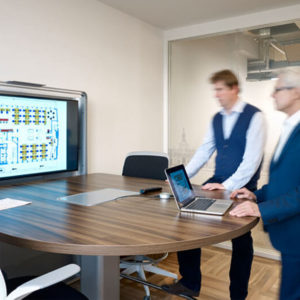
Us & Co offers bookable meeting rooms for both members and external bookings at our work spaces in London Monument and Stratford*. All of our meeting rooms are high-tech, collaborative meeting spaces, equipped for video conferencing, presentations and brainstorming workshops. Click here to learn more about meeting room bookings in London.